2010年10月7日 星期四

Video-sharing sites

Do video-sharing sites such as Youtube enhance or worsen creative culture?

I think video-sharing sites can enhance creative culture.
I do agree with some points from Roman Marek but some I don't.

That's true that today those video-sharing sites in the internet are really really accessible, everybody has at least one computer at home, everybody can go on to the internet by just a click and that is no region limit.  Videos or ideas shared in the internet can be seen by everyone in the world.  But I will take this as an encouragement.  Since people can be easier to show their things up, it can motivate them and encourage them to make something creative and show it up in the internet.  Especially internet is a virtual environment as Roman Marek mentioned in the conference, it is unnecessary to show their real name and identification, it makes them even dare to show their creations.  It brings opportunity to the creator.  For example, you uploaded one of your video works to a video-sharing site, one day, a director, somehow, saw your video on that site and he really like your work, he may then offer you job! It can really happen indeed, no one knows.  There are some sites for people do share their video works seriously.
That is one of my favorite site
http://www.open-art.tv/theater/movielist19.html


I think video-sharing sites provide a platform for people to exchange comments and having conversation which is very important to creative culture, because it could be where you can fresh idea and knowledge from.  Actually, I have suggested similar point in my previous entry.  Some videos may talk about their own countries, or they want to express their own opinions, once they are uploaded, then different people from different countries can watch that video and then give response, feedback and comments on that video at anytime, it is like a conversation, it can be between creators and viewer, and also creators and creators.  It is a good platform to have conversation and cultural and creativity exchange.


Roman Marek is worried about the confusion between professional creator and amateur creator.  However, I think it can make the creative culture comprehensive and enrich the creative culture.  As the sharing sites is opened to everybody, different types, media and different kinds of content can be found in the site.  Also, people can learn and be inspired by each other. 


What I agree with Roman Marek is the copyright infringements.  People can access and receive things too easily, so copying others' ideas or videos or images without notifying can be happened.  Moreover, I agree with his "recycled videos", viewers can get the original material easily can re-edit or re-mix it, some (I could say ALL) of them are meaningless and pointless.  The following is an example:


This is the original video
This is a popular video in HK
In this video, a girl, Ruby, and obviously she is student, she criticizes the English  pronunciation of HK secondary school teachers.  Her video got a lot of criticism as well.


This is the remix version done by another guy.
He took the original video and did editing on the music and the vocal of Ruby. 


2010年10月6日 星期三

Youtube in Class: "Bus Uncle" and "Leave Whitney Alone"


I prefer "Leave Whitney Alone"!


I will rate it 9/10


1. How many viewers are estimated to have watched the youtube video?
"Bus Uncle" received 1.7 million hits in the first 3 weeks after it was released. (according to wikipedia)
"Leave Whitney Alone" had over four million views in two days. (according to wikipedia)


2. How would you rate the video?
a) Is it of high quality in technical terms? Is it interesting aesthetically eg camera angles, use of light, the narrative, and so on?
Those high rated videos are not in quality in terms of image and aesthetics.  I don't think they did pay attention to the lighting, camera angles and the resolution of the video.
"Bus Uncle" is not good in image quality, it doesn't have high resolution, it seems like shot by a mobile phone.
"Leave Whitney Alone" is not delicated to the camera angle, it seems that it shot by Chris Crocker, the only character in the video, the camera is held by him.  Therefore, close-up of him is the only camera angle in this video, we can even see inside his nose when he cried sadly.  Also, we can see that he is not delicated to the background setting as well, the whole video is shot under the bed, so the sheet became his backdrop.
"Guitar", obviously, is not delicated to the use of light.  The background is too bright while inside the room is too dark.  Also, the image quality is not good as well, everything in the video seems blurred. 

b) Does it raise interesting socio-cultural issues? 
Yes, I think they raise interesting socio-cultural issues.  Those videos are, somehow, like documentry video.
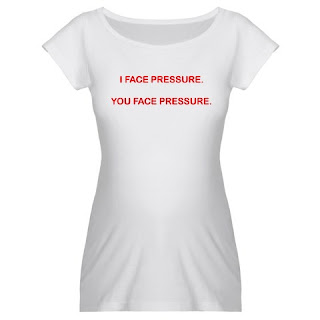
"Bus Uncle" reveals what happen in the HK daily life, what is about in our living environment, especially it is like a reality show, it did happen in live action.  After this video is released, it did arouse people to think about the PRESSURE problem in HK.  Bus Uncle kept shouting at the young man and even used bad language, is living in HK very stressful which makes Bus Uncle that angry?  Does Bus Uncle have Bipolar Disorder?  And it developed to another question--do HK people suffer a lot from hidden pressure?  Also, what the uncle said in the video have become popular culture in HK since then, it even become a gimmick of commercial products. Apart from commercial products, some TVC imitated and are inspired by this video.

That is a screen from the video 

Famous slogan of Bus Uncle printed on a T-shirt

A TVcommercial got the idea from Bus Uncle to promote World Cup


"Leave Whitney Alone" is kind of like expressing own idea and opinion on a particular matter.  Especially, Britney Spear is such an international idol and under the circumstance that everyone was criticizng her, it is interesting to see that an American, Chris Crocker, tried to defend Britney and it is interesting to see how an American sees this idol who is in the same country with him.  Chris Crocker presented it in such a dramtic way, it must be very easier to get the attention and attracts people to do some "follow-up searching", for example, the background of Chris Crocker, why he is so emotional about that thing, why he dared to post this video on youtube which is a really popular video sharing channel in the world, and what Britney did on him/American which made him so emotional.  Be honest, I could not recognise whether he is man or lady, so it makes me more curious about who he is actually.  Then I found out that he is actually gay, so it brings up another interesting cultural question - what is the position or status of a gay man in America? Because of his interesting character and gender, he brings out a moral issue about gender and self-identification.

Photo of Chris Crocker
(photo from http://en.wikipedia.org/wiki/Chris_Crocker_(Internet_celebrity))


Comments of "Leave Britney Alone" on youtube

3. Do you think it deserved the attention that it received from the internet community?


Yes, I think they deserved to gain attention.  I will take it as a cultural exchange in fact.  Those videos raised up some cultural issues of their own countries (HK for the "Bus Uncle" and America for "Leave Britney Alone").  And internet community is such an international space, everyone in the world can watch it and give comments on it.  So it can be seen that there are loads of comments discussing the video in different aspects, it is like different people from different countries having conversation although some of them are quite rude and not in a good manner.  It serves as an opportunity for cultural exchange, it deserves the attention.


2010年9月29日 星期三

Film in class: Mission to Earth

1. What is new or different about digital cinema compared to traditional filmmaking?
Since digital cinema has appeared, film can be stored in hard drives and DVD which are portable, small in size and the film can be projected stably while film projector is used in traditional filmmaking.  Film is in good quality, including image and sound, and film can be stored in convenient file format after digital cinema emerged.

3D movies and animation start getting popular while traditional filmmaking could only produce film in 2D.  3D movies does give a new definition to "watching experience".  Things on screen becomes live and audience no longer just sit there and watch the movie, instead, they seems like particitpating in the movie which enhance the theater experience. (Lev Manovich, "What is Digital Cinema", in Peter Lunenfeld(ed.), The Digital Dialectic, p.173)

Film footages become digitalized, a lot of digital mastering and editing can be done by digital technolgy, so on-location shooting is not the end point, things can be adjusted, changed and modified at the later stage (after the shooting), such as the audio, picture and colour, special effects can be added in the film.  It is a new era in term of the filmmaking process.  Moreove, it turns out that it brings job opportunities, because the field needs new skillful labor to do the special effects. (Lev Manovich, "What is Digital Cinema", in Peter Lunenfeld(ed.), The Digital Dialectic, p.178)

Because of the new technology, animation can be mixed with live actions, it mixes up the virtue space with the reality.  Fictional story is no longer fictional, it comes true now.


2. What other art forms does this film remind me of?
The visual composition of this film reminds me an abstract painting done by Piet Mondrian called Composition ll in Red, Blue and Yellow.  Both of them seem like having a grid of the screen, the screen is divided into different sizes of squares.  The coloured squares in the painting is like the little square screen in the film.

Digital and analog photography

1. Photographic effects

Colour filter can be done by both digital and analog technology, it can be done by just a click in the Photoshop or traditionally putting a coloured filter paper in front of a camera, then there will be a layer of colour on the top, just as the sample blow:

A red colour filter is used in this photo

And that is what we use as a colour filter in analog technology:

 Also, we can change the lighting by both digital and analog technology. By digital technology, we can adjust the brightness on the computer. By analog technology, we can also change the lightness of the environment in the real life, like the light setting.


2. ONLY done by digital technology

By using digital camera, you can take thousands of photos without noticing that, because you can delete what you do not like at anytime.  It makes people "taking photo" cheaper and more popular, because now you can plug the camera into the computer, then you can see the photos on the computer or print it out which is totally free and can be done at home.  By contrast, we had to pay and develop film which is quite expensive.  Therefore, people, nowadays, don't really take photo that serious and not really think about the composition when they press the camera shutter, because everything is too easy.

Apart from the side effect, digital technology does bring us convenience, for example, photoshop.  We can adjust or and process the photo at  a later stage.  If you cannot make it perfect on location when you are shooting, such as the lighting or even the make up on the person, technology can do it for you.  Let's watch the following video, then you will understand the power of technology :)

(goshhh! gossip girl is no longer gossip girl, 
hahaha, kidding, she is still gorgeous without make up!)


However, because of the amazing technology, people now start getting confused with photography and reality, things shown in the photo is not what you can see in the reality, and you may question "which is the truth?"  Everything can be happened in the digital world.


3. Differences

Analog photography:
- use film -- so photos cannot be seen right after we take the photo
- using chemical, darkroom

Digital photography:
- save in a memory card -- photo can be seen immediately
- pixels
- computer basis -- information can be changed and adjusted, we can delete photos which we do not like
- photos are more under control

2010年9月8日 星期三

which will you choose - OPEN source or PROPRIETARY?

For me, I will choose proprietary encyclopaedia.

The information privodeed by proprietary encyclopaeida should be more accurate and reliable than open source. The proprietary encyclopaedia should be published by different related scholars and experts, so, actually, the information there are supported by strong scholarship. For example, professional editors of Brittanica keep revising and correcting the information published on the encyclopaedia. that kind of information have a higher credibility. However, open-source encyclopaedia is up to the public which mean everybody to provide and edit the information. So, who are the editors? And how reliable are the information? No one can guarantee the quality indeed! It is opened to public, yes, there maybe some elitists editing articles, but who can guarantee the qualification and the professionalism of that "elitist"? He just claims himself elitist on the internet.  And the thing is, Wikipedia allows him to edit the article not because he is proved that he is the export, is just because he is one of the public.  "Wikipedia in fact had a third more inaccuracies than Britannica." (from http://corporate.britannica.com/britannica_nature_response.pdf)  That's why university students are not supposed to use information from, for example, wikipedia as their supporting document in thesis. The accuarcy of data is especially important when we need some factal figures.

Of course, to set up a proprietary encyclopaedia is more expensive than an open-source encyclopaedia, for example, to hire those qualified exports and scholars.  I know it sounds like very attractive that the open-source encyclopedia is free. As setting up a  proprietary encyclopaedia costs certain amount, so proprietary encyclopedia won't be free for access. Encyclopaedia Britannica, for example, charges $70 a year for full access, actually, if it can be the only encyclopaedia in the world, then people should pay it anyway if they need it.  It can compensate the running costs of the proprietary encyclopaedia and it is affordable to general public in fact.  And proprietary encyclopaedia provides articles in good quality which is ethical to the society, so it is still worth.

You may say that open-source encyclopaedia is having open-editing approach, so different people from different countries or cultures can edit articles, it can satisfy any needs of particular cultures, so it is better than proprietary.  But, as Dale Hoiberg, the senior vice president of Encyclopaedia Britannica, said that they have more than 4000 scholars and exports around the world, so I think they can manage different cultural needs as well.

My another concern is the ethical matter.  As the articles on proprietary encyclopaedia are based on trained editors, fact-checkers and more than 4000 experts and scholars, so the quality can be guaranteed and should be higher.  Let's imagine, Wikipedia becomes the only encyclopaedia in the world which we are not sure if their articles or information are true or not, then a big question here: WHAT IS THE TRUTH? We do not know the truth forever.  It will become information flooding in the whole world but we never know if they are true or false.  It will not be happened if proprietary encyclopaedia is the only one can be remained.  Also, even feedbacks from readers will be checked by qualified editors before they are released,(from [Will Wikipedia Mean the End of Traditional Encyclopedias?] ) it can ensure the interaction, discussion and debate healthy, in good quality and meaningful.


This all my opinion, so please feel free to give me comments, cheers :)

Modern (Digital) time

1. Technology can bring convenience and efficiency.  The whole industrial production becomes systematic. Machinery can speed up the whole production, machines can work faster than manpower, and it can omit a lot of steps which need to be done by manpower before, it saves manpower at the same time. It also makes sure that each product is identical, quality can be guaranteed.  As the production can be speeded up, it saves time and mass production can be implemented.  Since camera has been invented, it shortens the distance between  people, boss can communicate with workers through the camera, he doesn't have to come down physically and talk to workers in front of them.  He can still talk to his workers even if staying at his office.  Obviously, if manpower can be reduced, efficiency can be increased, then it can help the company to make more profit and, of course, the boss can benefit from that.  Workers can benefit from it as well as the production procedures can be well organized.

2. Firstly, these technologies brings convenience to the main character, Charlie, as mentioned in no.1.  However, it brings negative impacts on him too.  Since the technology is invented, as time goes by, it seems that technology starts leading and dominating human. Charlie and other workers cater to the machine, the circuit tape.  Also, technology isn't, eventually, human mind, error can be happened and become out of control and ruin human.  Finally, Charlie starts having illusion and confusion between working with real people and working with machine.  We can see that Charlie can't stop doing the same action even if he is off from work and does it on human, not only on product.

3. In fact, computer and internet really bring convenience to us. Just one click, a lot of information can be found out, even international information. Computer and internet can save us time.  However, since everything can be done at home or we just have to sit in front of the computer, I think we start lacking of experiences. There are still something we better go to experience it rather than just get it from the internet, such as culture, it should be different.